
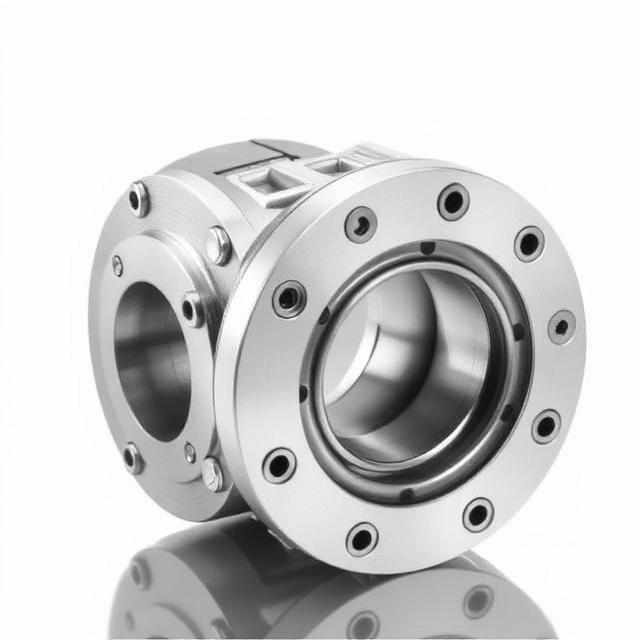
Fluid couplings are advanced hydrodynamic devices used to transmit rotational power between two shafts using hydraulic fluid. They are widely used in industrial applications where smooth startup, shock absorption, and overload protection are essential. By eliminating direct mechanical contact between driving and driven components, fluid couplings significantly reduce wear and enhance equipment lifespan.
What Are Fluid Couplings?
A fluid coupling is a type of hydraulic coupling that consists of an impeller (input element), a runner (output element), and a specially formulated hydraulic oil. When the driving shaft rotates, the impeller accelerates the fluid, transferring kinetic energy to the runner. This energy transfer causes the driven shaft to rotate, allowing torque transmission without direct physical contact. A controlled amount of slip is always present, which helps absorb shocks and dampen vibration.
Working Principle of Fluid Couplings
The operation of a fluid coupling is based on hydrodynamic energy transfer. As the impeller spins, centrifugal force pushes the fluid outward, creating a circulating flow between the impeller and runner. The fluid movement transfers torque smoothly and progressively, making fluid couplings ideal for soft starts and variable load conditions. This mechanism also protects motors and gearboxes from sudden load changes.
Types of Fluid Couplings
Fluid couplings are available in various designs to suit different industrial requirements:
Constant Fill Fluid Coupling – Pre-filled with oil for consistent torque transmission
Variable Fill Fluid Coupling – Allows torque control by adjusting oil quantity
Delay Fill Fluid Coupling – Provides gradual startup for high-inertia loads
Brake Drum Fluid Coupling – Combines power transmission and braking functionality
Each type is engineered to optimize performance under specific operating conditions.
Advantages of Fluid Couplings
Fluid couplings offer several key benefits in industrial power transmission:
Smooth and shock-free startup
Effective overload protection
Reduced vibration and noise
Lower mechanical wear and maintenance
Extended service life of connected equipment
These advantages make fluid couplings ideal for heavy-duty and continuous-operation systems.
Applications of Fluid Couplings
Fluid couplings are widely used across multiple industries, including:
Mining and material handling
Conveyor and crusher systems
Cement and steel plants
Pumps, fans, and blowers
Power generation facilities
Marine and offshore equipment
Their ability to handle high starting torque and fluctuating loads makes them suitable for demanding environments.
Material and Design Quality
High-quality fluid couplings are manufactured using precision-machined steel components and heat-resistant seals. Proper balancing, reliable lubrication, and robust casing design ensure safe operation under high speeds and temperatures. Quality manufacturing standards ensure consistent performance and long-term reliability.
How to Select the Right Fluid Coupling
When choosing a fluid coupling, consider factors such as:
Motor power and torque requirements
Startup and load characteristics
Operating speed and temperature
Application-specific performance needs
Maintenance and service conditions
Correct selection ensures efficient power transmission and optimal equipment protection.
Conclusion
Fluid couplings provide a reliable and efficient solution for smooth power transmission in industrial machinery. Their ability to absorb shocks, reduce wear, and protect equipment makes them an essential component in heavy-duty applications. Selecting the right fluid coupling enhances operational efficiency, reduces downtime, and ensures long-term system reliability.






Write a comment ...